The $20 AI subscription isn't really $20
A small "$20" price tag in sharp focus in front of a much larger, faint dollar figure filling the background, on warm off-white paper.
A claim is circulating that the true cost of your $20-$200-a-month AI subscription is a delusion. The real cost of running these tools is a lot higher, and investors are covering the difference. From what I have read, I believe much of this is overblown, but the core is right: people who rely on AI for their daily work and business need to start planning for it rather than ignoring it.
I dug into the noise this past week, and I want to lay out what I think is worth paying attention to, what I think is truly overblown, and what I'm doing to prepare with my own work. I build with these tools every day, and I'd rather not get caught without a solution when prices start to go up, or usage rates get throttled, and features get pulled behind “API use only” (because they will - Fable 5 is a perfect example).
The stuff I think is worth paying attention to
You don't have to take my word for it. These AI companies' own numbers say it. The Information reported OpenAI's internal projections of roughly a $14 billion loss for 2026, about triple that of 2025. And leaked 2025 financials, which the Financial Times checked, showed an operating loss of $20.92 billion on $13.07 billion in revenue. Right now, investors are covering the difference, and that's what pays for the tools you and I use every day.
When OpenAI put out its $200-a-month Pro plan, Sam Altman went on X and said, "We are currently losing money on OpenAI Pro subscriptions! People use it much more than we expected." This is my shocked face… Surprise, a flat monthly fee can't keep up with the expenses a heavy user incurs to run. I am not complaining, by any means. I know my ~$200 a month is going a LONG way right now.
Two years ago, asking a chatbot a question got you a few hundred words in response, and that was that. These newer agentic tools work differently. You ask a coding tool to fix a bug, and it goes off and does a pile of work you never see. It spawns subtasks, rereads your files, checks its own work, writes drafts and throws most of them away, and runs tests before it says a word back to you. By some estimates, that's five to thirty times the tokens of an old chat, and anyone who's used Claude Code has watched a single request burn through hundreds of thousands of them.
You'll also hear that compute keeps getting cheaper, so the price of a single token really does fall year over year. That part's true. The catch is that the number of tokens one task burns is climbing faster than the price per token is falling. So each word gets cheaper, and your total bill still goes up.
The silver lining, I suppose, is that the reliability of these AI systems is improving. I believe, though, that it will come at a cost many are not prepared for.
You don't need a doomsday timeline to see this - it's happening already. Plans and models are creeping up in cost, limits are tightening, and features that used to be free are being moved behind a paid tier or stripped from cheaper subscriptions and added to more expensive ones. Anyone who has been an Anthropic subscriber over the last six months can attest to this.
The stuff I'd take with a grain of salt
Anything beyond this, though, usually comes bundled with some bigger, splashier claims, and that's where I'd encourage some caution.
Start with a number people love to quote: a heavy user (software engineer type) may rack up something like $15,000 a year in real API costs while paying closer to $1,200 on a flat plan. In that scenario, more than 90% of the true cost is being covered by someone else.
Numbers like this make great headlines, but they come from a small data set and a single assumed usage pattern. The real cost depends entirely on how you use the platform. So, for my own planning purposes, I model my own usage rather than just use estimates that outlets more interested in ad revenue and clicks publish.
Even so, I have run up some seriously expensive sessions over the last few months, especially when Fable 5 hit the market again this past week. There have been plenty of projects I have been working on over the past few weeks, with an estimated usage of $13-$15 per hour. So the argument isn't completely wrong. But that doesn't mean the same dynamic applies to every person or organization. It might, but the data isn't there yet.
Plenty of people, myself included, are constantly looking for ways to optimize token usage. The biggest culprit is usually not outsourcing simple tasks to lower-tier models or using scripts for predictable, laborious work.
Then there's the "money-go-round" argument. There is some pretty solid information suggesting that much of AI's reported revenue is actually the same dollars circulating through the same small ecosystem. Microsoft invests in OpenAI; OpenAI spends heavily on Microsoft's cloud; Nvidia sells chips into that same circle; and each company books its share as revenue. There is reporting to back this up, but it's also big-picture market analysis that I can't verify myself right now. Will the bubble burst? Probably not - these AI companies have ensured, quite successfully, that AI is embedded in nearly every sector of the economy, such that backing out now would cause an economic collapse so severe that the U.S. Government, at least today, likely won’t let it happen. So I note it, treat it as context, and move on.
There's also a common complaint that companies may be downgrading models behind the scenes, swapping a flagship model for a cheaper one, reducing memory, or tightening usage limits, all to cut costs without telling users. I'm not sure what to make of this. There have been times when I have wondered whether this is happening in my own work, but I can't realistically separate product changes from getting more familiar with the tools and just slowly expecting more. I'd leave this one as largely unproven for now.
And then there's the full doom scenario. By some estimates, roughly 40% of AI startups are already dead, a bigger shakeout is coming “sometime” by the end of 2026, and the entire cheap-AI era is weeks away from collapsing. Maybe. Doubtful though. To me, most of this is marketing fluff. They have hard dates attached, and hard-dated predictions tend to age poorly (anyone remember Y2K?). I'd rather plan around what's happening today and maybe over the next week or so than bet on a specific crash calendar.
What I'm doing about it
I'm assuming today's prices won't last. I also don't expect usefulAI to stay this cheap. Costs will either go up directly or be buried elsewhere. If you want your iPhone to come with a smarter Siri, you should probably expect to pay some kind of AI tax.
Today, I am building in a way that makes a tool that triples its cost or sends out a shutdown notice more of an annoyance than a disaster.
Right now, I am spending a lot of time modeling what my own processes and workflows would cost at today’s API rates and identifying high-risk areas given the cheap availability of AI tokens. I am working on keeping workflows and loops tightly scoped, optimizing my token usage, and, when possible, using cheaper models for simple grunt work, reserving the expensive ones for tasks that demand more intensive reasoning and effort. In addition, focusing on portability and good documentation so switching providers takes an afternoon rather than a rebuild.
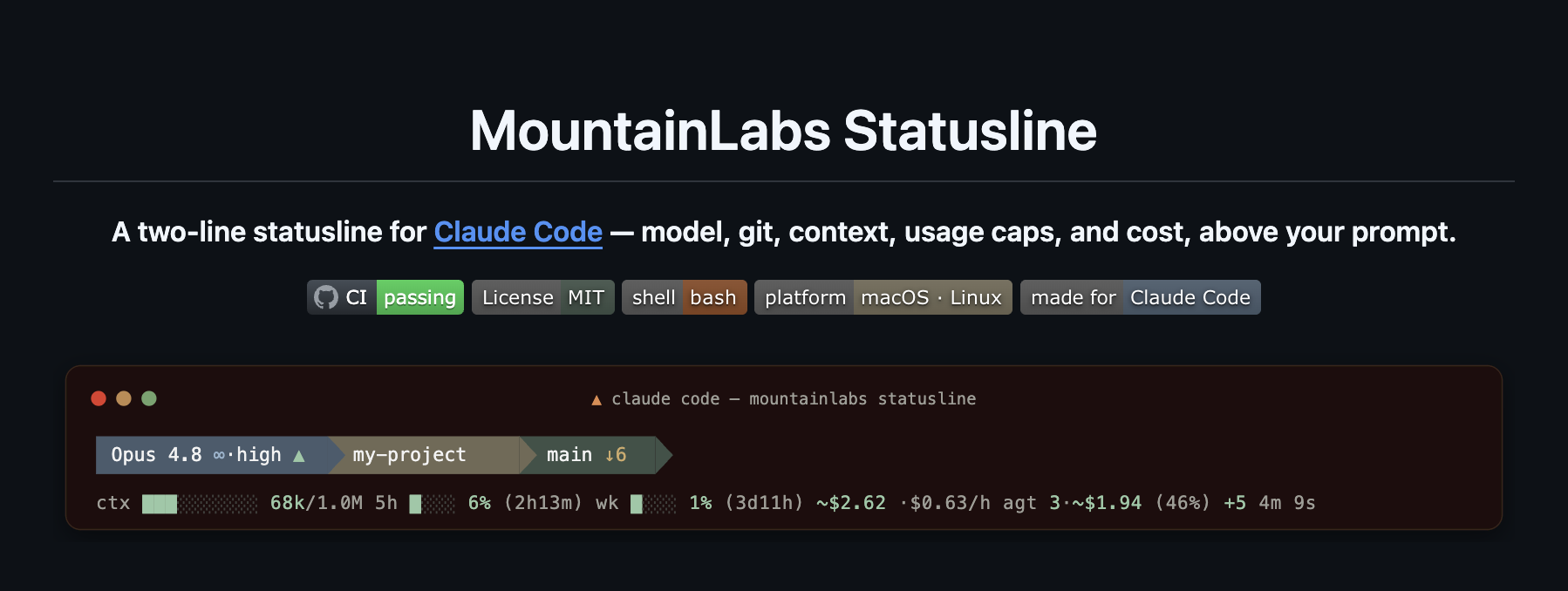
I built my own status line tool for Claude Code to help me see the cost of my work based on actual token usage and the costs of the models I use. You can grab it here if you would like.
I'm treating "will this price last?" as an engineering problem, the same way I'd treat a flaky API, because that's basically what it is.
Investors are covering a significant gap right now, and I expect it to close. When this will happen, I have no idea. But I would plan for it to happen over the next year or so. Two major AI companies are looking to go public, and when that happens, you can expect investors to expect these companies to turn a profit in short order. You don't have to buy the 'everything-collapses-in-a-month' version to prepare for that. I'd just avoid building your work or your business around the assumption that today's prices will stay the same forever.
I publish this writing for free. If it was worth your time, a coffee helps me keep it that way.
